Rate cut impact
The estimated gain on bonds and property, and the saving on loans, with assumptions.
Model the impact of a [200bps] rate cut on our fixed income and real estate holdings, and on what we pay on our loans. Show your assumptions.
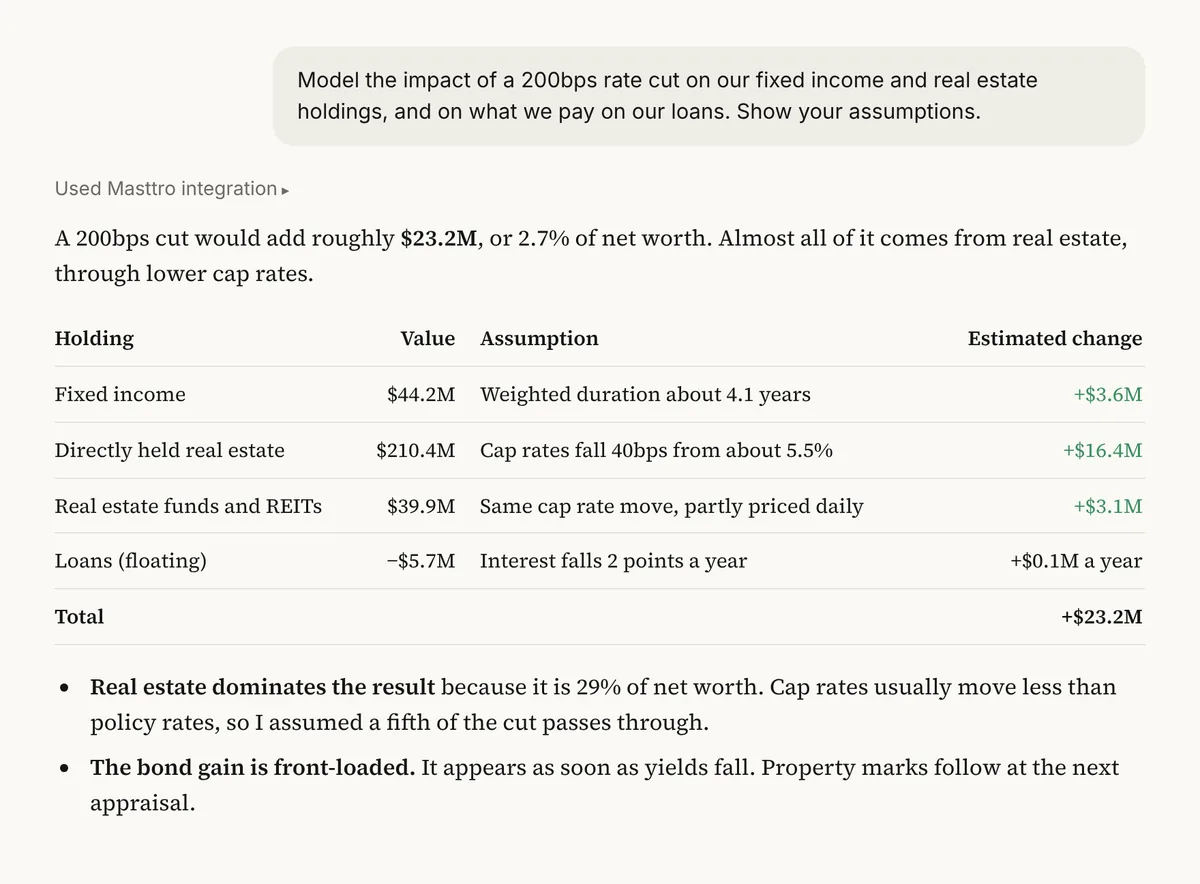
Illustrative output based on Masttro's demo family office data.
The estimated effect on fixed income and real estate values.
What the family would save on its borrowing.
Duration and sensitivity assumptions are spelled out.
Replace [200bps] with the size of the rate move you want to model.
Why model a rate cut across assets and loans together?
A change in rates moves both sides of a family balance sheet. Bond prices and property values respond, and so does the cost of any floating-rate borrowing.
This prompt brings fixed income positions, property values and loan balances into one estimate, so the principal sees the net effect rather than three separate stories.
Assets and borrowing in one view.
Sensitivities are stated so the numbers can be checked.
A follow-up runs the same test for a rate rise.
Questions about this prompt
What data does it use?
Fixed income positions with type and maturity where available, real estate values by property, and loan balances in Masttro.
How are bond price changes estimated?
The AI estimates sensitivity from maturity and type and states its assumptions, since exact duration may not be recorded for every bond.
Can I model a rate rise?
Yes. The first follow-up runs the same test for a 100bps rise.
Does it cover property cap rates?
A follow-up asks how sensitive each property is to a change in cap rates.