Closed-end fund scorecard
One row per fund with the standard private markets multiples, best to worst.
Show each closed-end fund’s vintage, paid-in capital, current value, TVPI, DPI and since-inception XIRR as of [month-end], ranked by XIRR, and flag the ones dragging the portfolio.
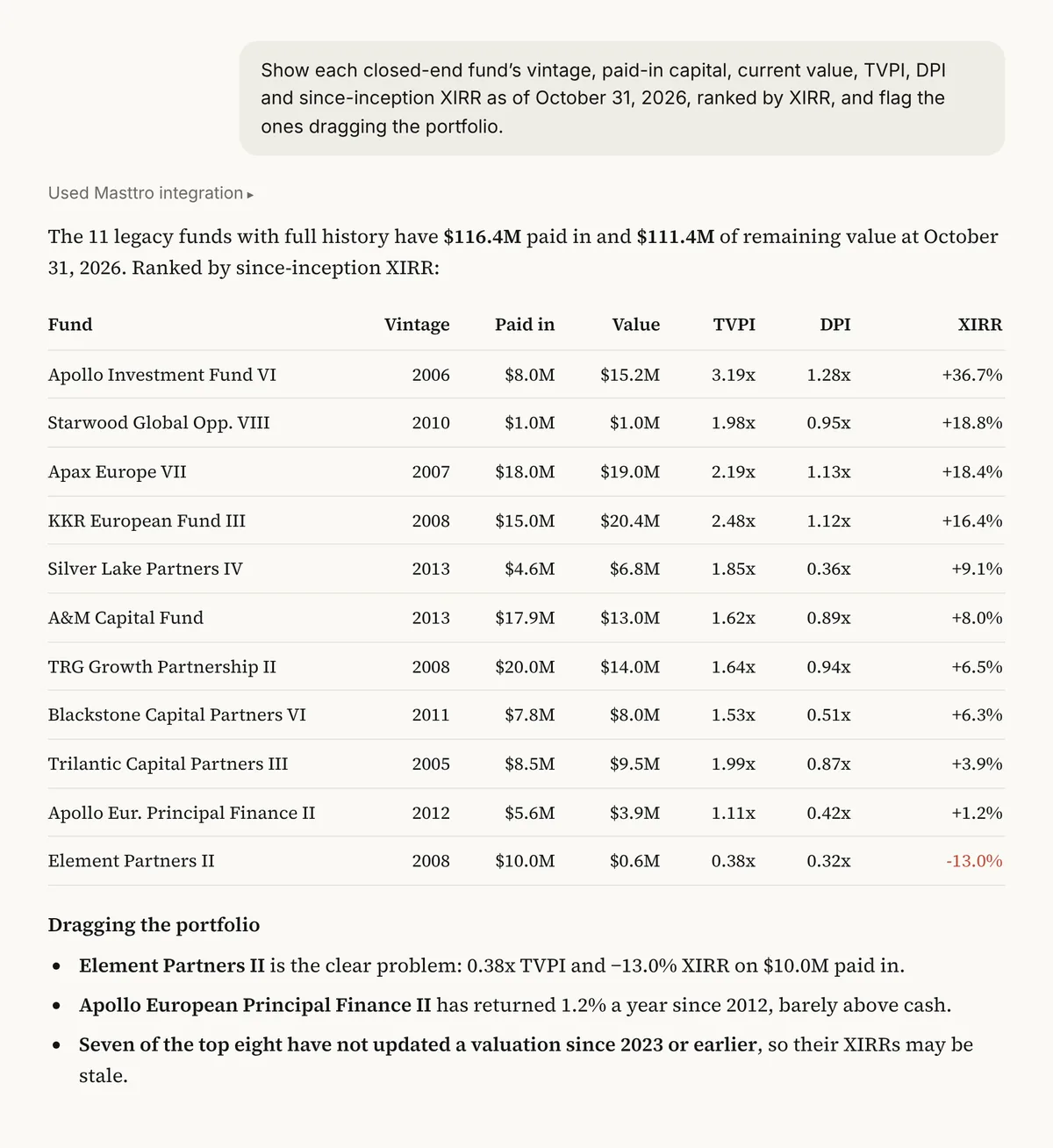
Illustrative output based on Masttro's demo family office data.
Vintage, paid-in capital and current value for every closed-end fund.
TVPI, DPI and since-inception XIRR, ranked best to worst.
Funds pulling the private markets result down are marked.
Replace [month-end] with the valuation date you report on.
Why keep a fund scorecard?
Private markets reporting usually arrives fund by fund in different formats and on different dates. Without one table, it is hard to tell which commitments are working.
This prompt lays out the multiples every GP reports in a single ranked view, with the last valuation date for each fund. The COO gets a consistent scorecard, and stale marks are easy to spot.
TVPI, DPI and XIRR for every fund in one table.
Best and worst performers are obvious at a glance.
See which numbers rest on old marks.
Questions about this prompt
What do TVPI and DPI mean?
TVPI is total value (distributions plus remaining value) divided by paid-in capital. DPI is distributions divided by paid-in capital, the part already returned as cash.
Why XIRR?
XIRR is an IRR that uses the actual dates of each call and distribution, which suits private funds.
Can I group by vintage?
Yes. A follow-up groups funds by vintage year.
Can I find funds with old valuations?
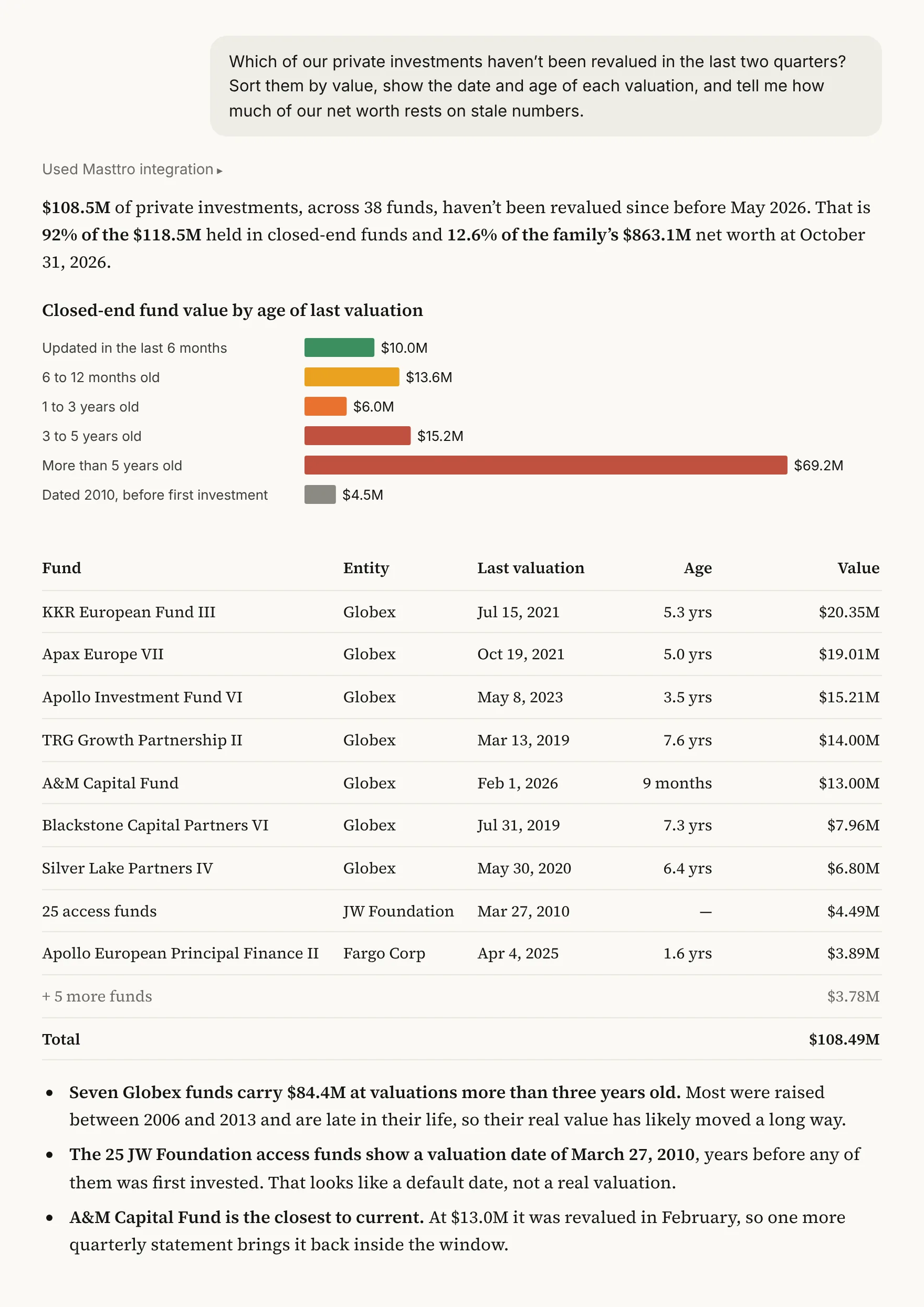
Yes. The last follow-up lists funds without a valuation in the last 12 months.