Alternatives against equities
Two IRR figures side by side, in the currency you choose.
Compare the 12-month IRR of our alternative investments against our equities as of [month-end], reported in [EUR].
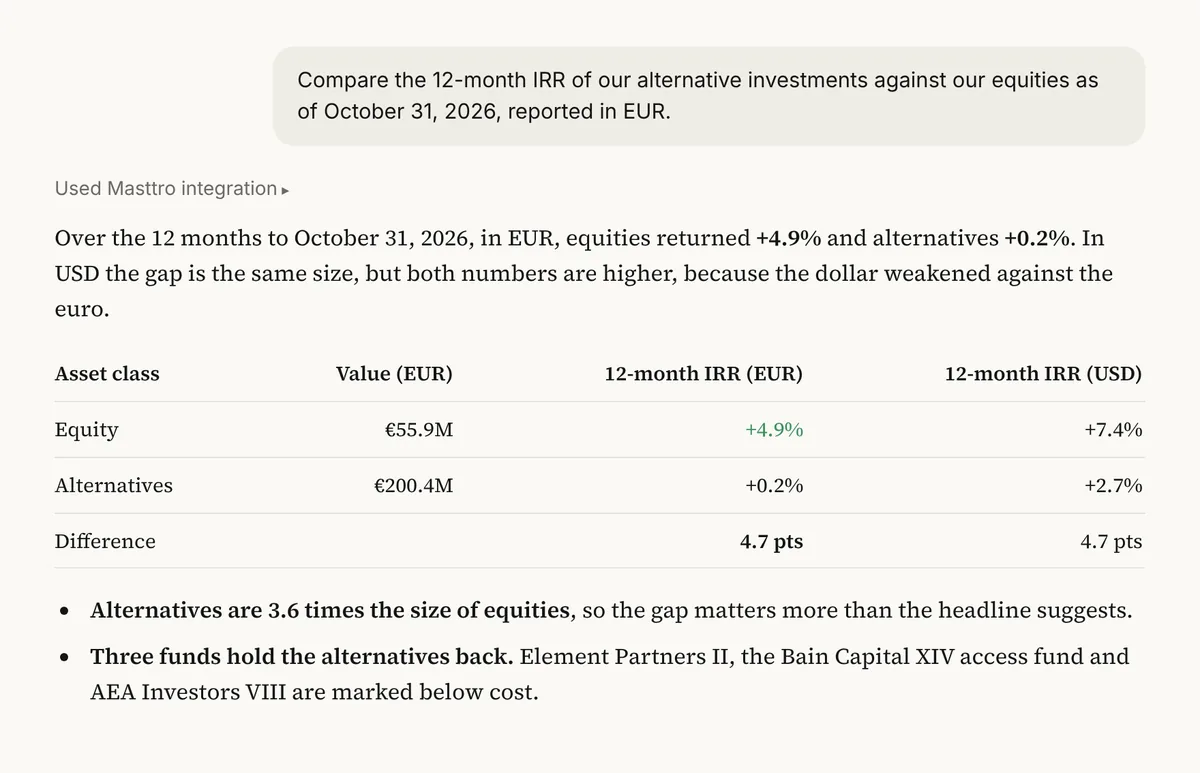
Illustrative output based on Masttro's demo family office data.
Twelve-month IRR for alternatives and for equities, side by side.
Both figures converted to the currency you name, so the comparison is direct.
Follow-ups add fixed income and real estate or rank the alternatives by IRR.
Replace [month-end] with the date to measure to and [EUR] with your reporting currency.
Why compare alternatives with equities on IRR?
Families add alternatives expecting a premium for illiquidity. Whether that premium arrived is a fair question to ask every year, and the only honest way to answer it is to measure both sides the same way.
IRR reflects when capital went in and came out, which matters for funds that call and distribute over time. Putting equities on the same measure gives the principal a like-for-like answer in one line.
Shows whether alternatives earned their place over the last year.
IRR accounts for the timing of calls and distributions.
Convert both sides to the currency the family thinks in.
Questions about this prompt
Why IRR rather than TWR?
Alternatives are funded and returned over time, so IRR, which weights the timing of cash flows, gives a fairer picture of what the family actually earned.
Which holdings count as alternatives?
Whatever is classified as alternatives in your Masttro asset classes, such as private equity, hedge funds and other private investments.
Can I add other asset classes?
Yes. The first follow-up adds fixed income and real estate to the same comparison.
Can I choose a different period?
Yes. A follow-up repeats the comparison year to date, or you can name any period in the prompt.