
Key Takeaways

The most important question about AI is no longer what the model can do. It is what the model can access.
Anthropic's launch of Claude for Financial Advisors on September 14 is a real advance, and one Masttro supports. The typical financial advisor spends much of the week navigating wealth platforms and planning tools. AI can make that faster, with clients benefiting from more attention and better service.
It is exciting. And yet, it seems we are only in the first act.
Why was Claude for Financial Advisors built for US advisors first?
Anthropic's launch was designed for US advisors. Every launch partner is a US firm, and the estate and tax workflow runs on US federal and state tax data. That is a sensible way to debut this technology, but it also reveals the scale of the challenge for families with complex wealth.
What does AI need before it can reason about a cross-border family?
Consider a family that holds an operating business in the UK, US real estate through an LLC, and a euro portfolio at a private bank in Spain. Before any model can reason about that family, every entity, custodian, and currency has to be mapped, reconciled, and kept current across three jurisdictions.
That can be surprisingly difficult. Cross-border holdings add complexity, but so do alternative investments, legal entities, and intricate ownership structures. All of it must be solved at scale, with reliable and complete data, for a tool like Claude to have its desired impact.
Why do families with complex wealth need a system of record?
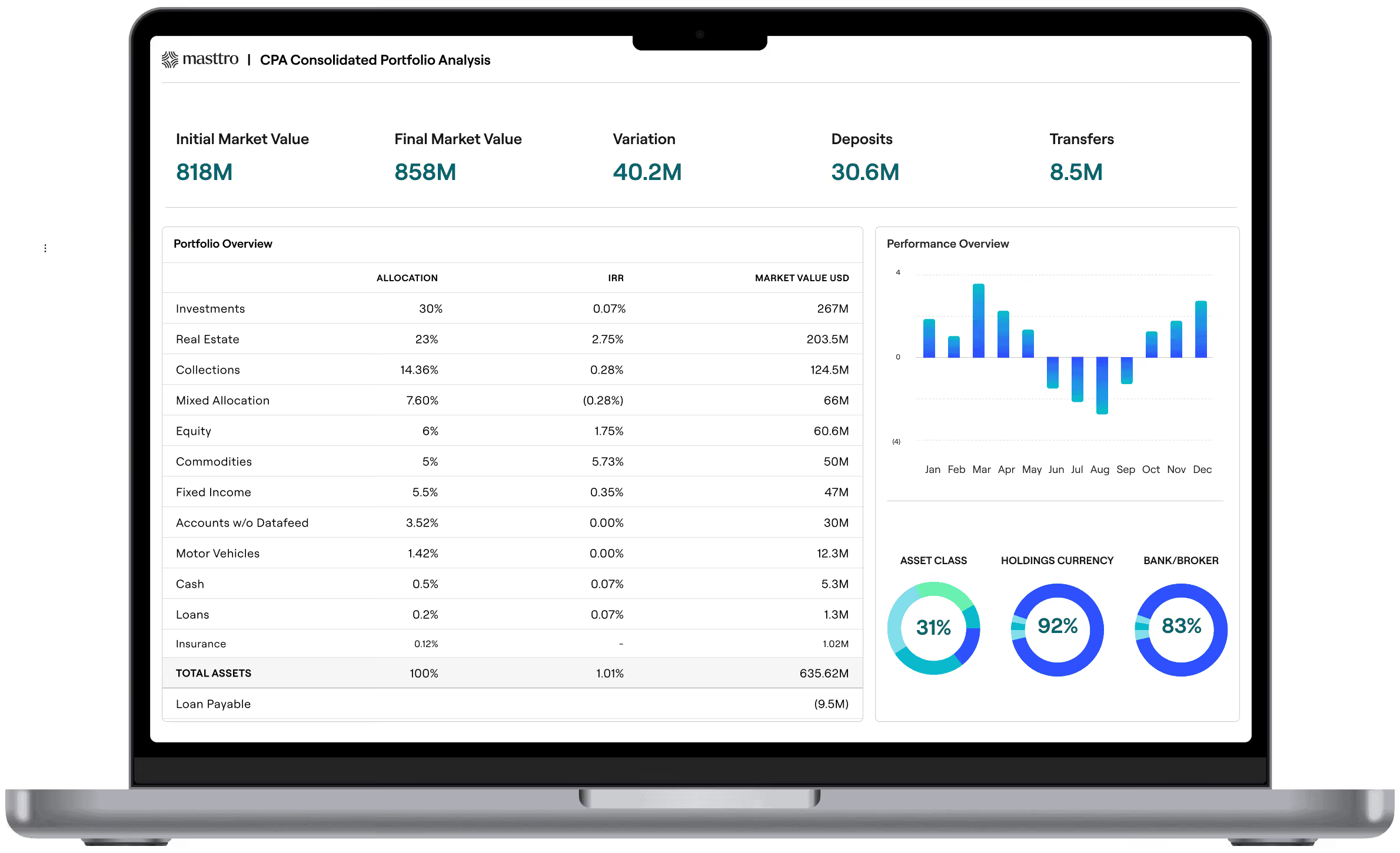
That's why families with complex wealth need a system of record: one place that captures their wealth data in full. It is where a model like Claude gets its facts, and if those facts are incomplete or out of date, Claude's answers will be too.
Which way does wealth data travel when Claude connects?
Data also has a direction of travel, and it is worth knowing which way it runs.
Connecting Claude to a wealth platform does not bulk export records to Anthropic. When a question requires client data, Claude requests it from the platform, and that data is sent to Anthropic to produce the answer.
Some connectors also run the other way. A CRM connector can let Claude create notes and update records, with the advisor approving each change.
What should firms settle before going live?
Firms should settle this before going live: who can connect Claude, which data it can reach, and whether it can change anything. Anthropic and its partners have made it clear that judgment and accountability stay with the advisor. The same standard should apply to the data itself.
How Masttro is bringing AI to the wealth owner
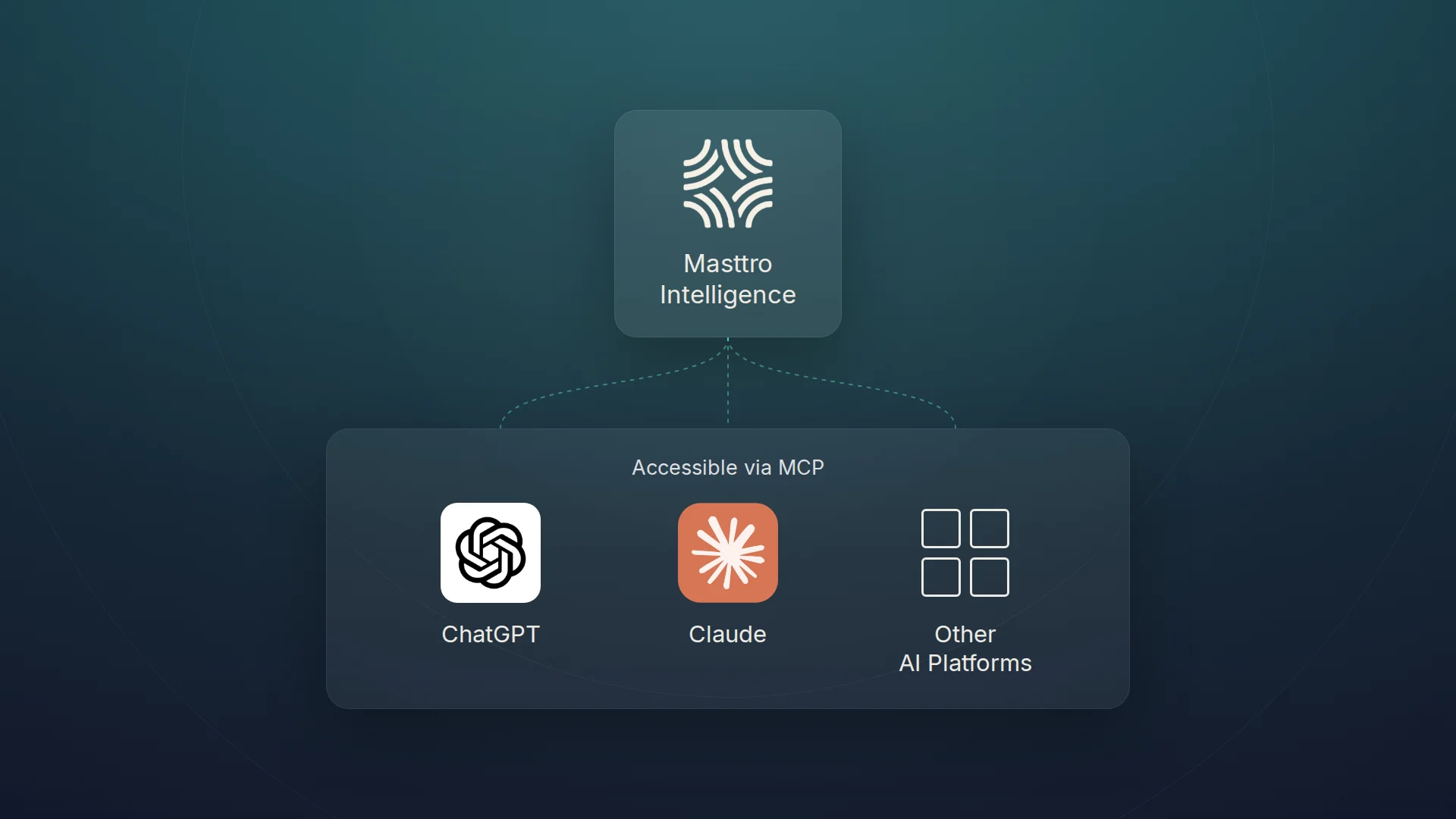
We believe in implementing AI where it makes the most difference to the wealth owner. Masttro clients already use AI via Masttro Intelligence, and we plan to extend the platform's capabilities through an MCP, launching in Q4, which will let clients choose which data leaves Masttro and which AI model receives it.
Access will be read-only, and no model can alter data within Masttro. Our approach is designed to offer choice without dependency.
AI will only ever be as useful as the wealth data underneath it. As the work of financial advisors evolves, Masttro's goal remains the same: to reduce complexity and increase trust.